• Skip to main content

Karan Chadda

Digital experience, marketing analytics, and AI

  • Home
  • Writing
  • Explorations
    • Web apps
    • GPTs
    • Fake news memes
    • Poetry by numbers (2015)
    • Social media best practice
  • About me

September 1, 2013

Guggenheim Bilbao, Iberdrola and ‘Tall Tree and the Eye’

Anish Kapoor’s ‘Tall Tree and the Eye’ sculpture sits strikingly outside Bilbao’s iconic Guggenheim museum. While gazing at its many orbs, I thought I could get a nice shot of Guggenheim reflected in the balls that make up the sculpture. While composing the shot, I noticed that I could also capture Iberdrola’s (huge Spanish energy company) headquarters.

When visiting the museum, it’s immediately notable that the two striking and dominant buildings in the area are Iberdrola’s HQ (a tall tree) and the Guggenheim (very much for the eyes).

The connection between the sculpture and its surroundings struck me as interesting, so I took the snap and here it is.

Guggenheim Bilbao, Iberdrola and ‘Tall Tree and the Eye’

August 15, 2013

A little less awareness, a little more call-to-action please

A couple of days ago, I tweeted the title of this blog as a thought for the day. It’s a thought that’s been circling in back of my mind for quite a while.

From the off, let me say that I think awareness is really important. People need to know your product or issue exists and what it’s for. But campaigns should be more than a public service announcement. They should make things happen.

I can see why communicators are drawn to awareness. It’s measured in surveys and clicks, RTs and likes. These are metrics that can be measured in different ways, aggregated, weighted and, dare I say, manipulated?

Increased sales. Legislative change. Altered business practices. These are all outcomes that are reasonably objective. You either achieve them or you don’t. Campaigns that make these things happen aren’t centred on awareness.

From staging post to destination

At some point awareness moved from being a necessary condition for achieving a campaign’s goals, to a goal in itself. It became an end point.

Anecdotally, I think a lot of it is down to the rise of engagement and conversations. There are countless papers and articles about the need to engage with consumers, to have conversations and build deeper relationships. Again, all of this is true. I have no quarrel with it. Yet, somehow the purpose of all this engagement and all these conversations has been lost.

What good are strong relationships and positive experiences if they are fostered and then left to passively convert themselves into sales? Campaigns should build on that positivity and then inspire people to a specific action. Those that do will always be more successful than those that stop at a good conversation.

All of this is blindingly obvious. It’s communications 101. Yet for some reason it needs restating. So let’s build awareness and have the conversations, and then let’s cap it all off by creatively inspiring specific, positive actions.

This article was also published here on Medium.

August 4, 2013

It’s all a blur

One year on from the wonderful 2012 Olympics, London is hosting its anniversary games. In a bid to build a lasting legacy, events are being re-run and, as hoped for by organisers and sponsors, capturing the public’s imagination.

Last year, I posted some snaps of the men’s road race. I was reasonably happy with the outcome but one thought lingered: clear, fully-focused images of cyclists speeding by might capture what happened, but they don’t capture the moment. The camera captures events with a level of detail that people do not. For us, everything whizzes by in a blur.

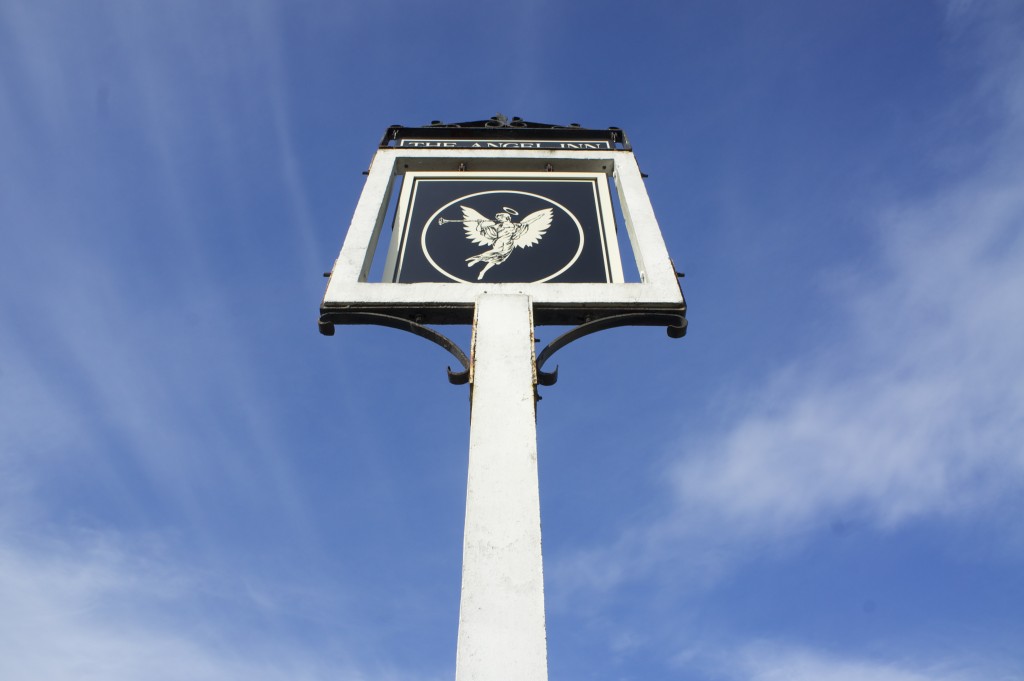
So this year, I was determined to try and capture the moment and not the facts. I staked out a place on a simple, straight stretch of road conveniently located right by The Angel.

The Angel

Having found a comfortable spot, I decided the best way to capture the sheer speed of the cyclists was to use blur. The technique is simple in theory and hard in practice. Essentially, all you need to do is move your camera at the same speed as your subject. Obviously, panning a camera lens at the same speed as a cyclist is tricky and you only get one shot.

Fortunately, the amateurs went first – they’re not that fast and there are loads of them so plenty of opportunities to get my eye in before the pros arrived.

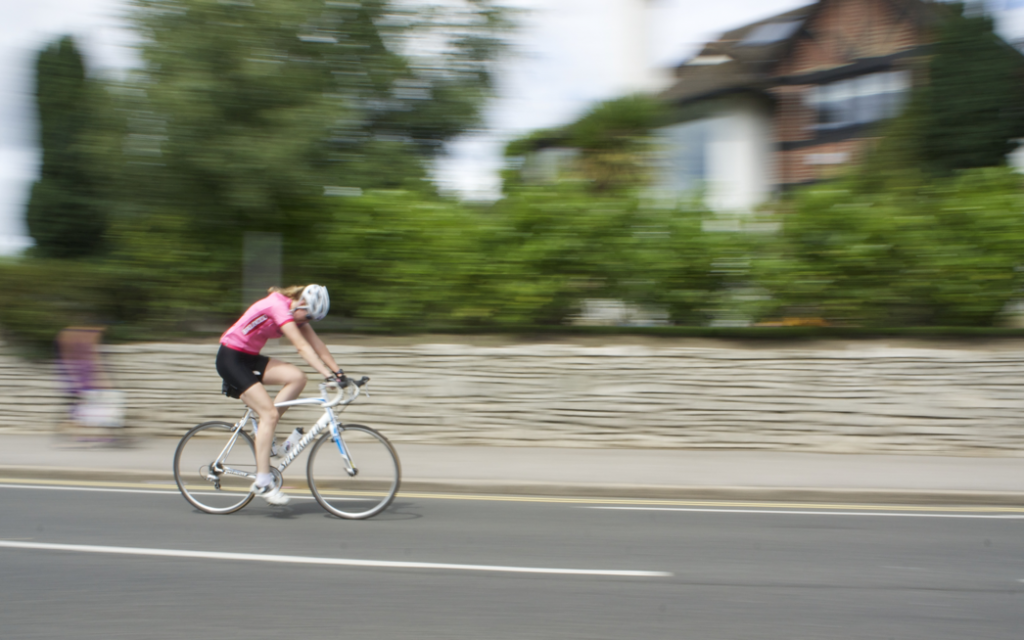
This image of a competitor, who’s not going super-fast, was an early attempt to get the effect I was after.

single amateur

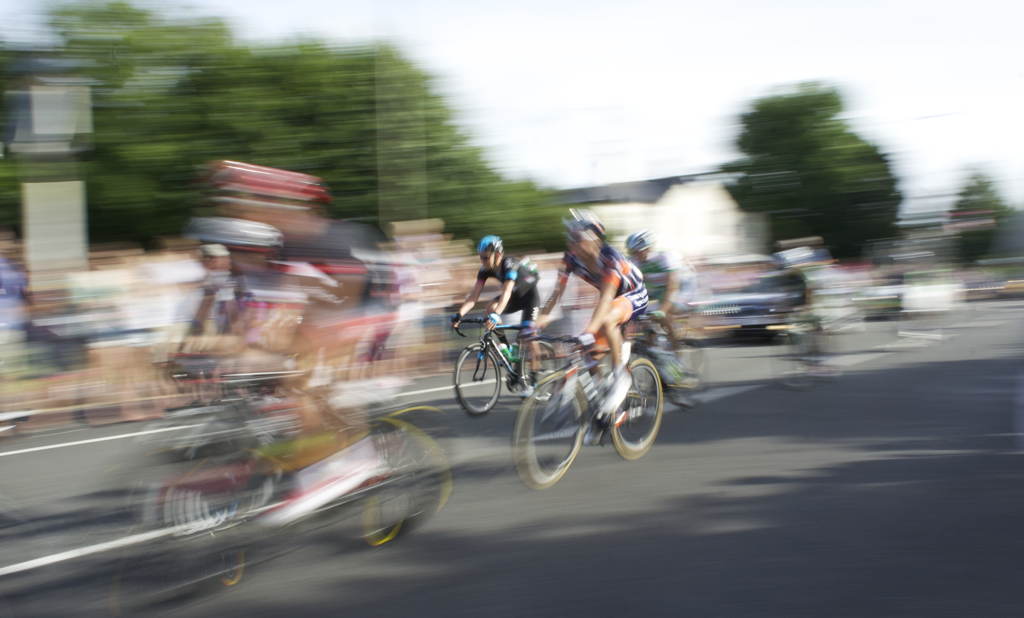
Trying to use the same effect with multiple cyclists was a bit more tricky – they’re travelling at different speeds so only one can really be in focus. Also, the panning appears to warp straight lines a touch (see the road markings).

amateurs multi

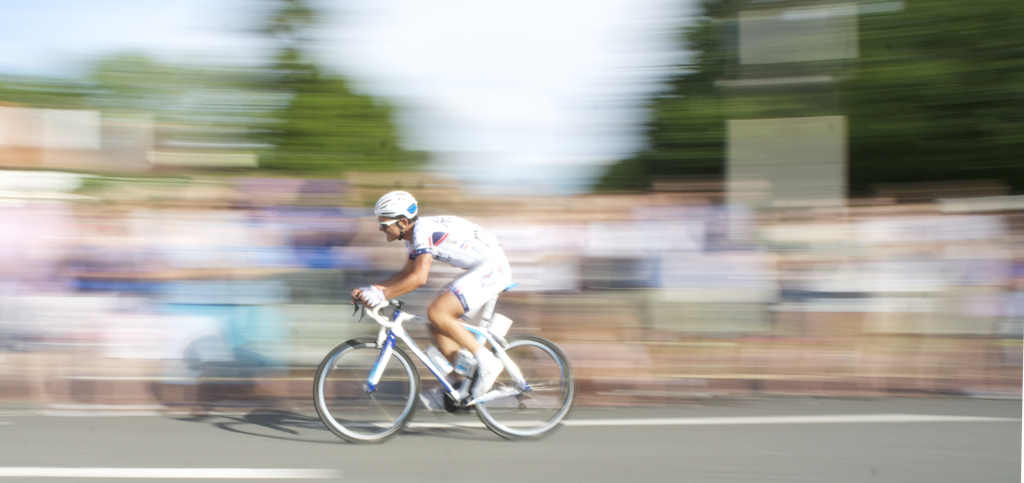
A while later, having crossed the road (and after a drink or two), the pros came. Preceded by police outriders and heralded by a helicopter, they flew past in the blink of an eye. This is one of the early riders who was ahead of the pack but not leading. It is my most technically accomplished image of the day (make of that what you will).

Pro speedster

Then it got a lot more tricky. When the main group hove into view, I’d set myself the task of picking out one rider and getting them in focus. I opted to capture a Team Sky rider. All technique went out of the window. Nothing was straight, everything was blurred, including most of the Team Sky cyclist. This shot has been cropped and had some dust spots cloned out but is otherwise unedited. For me it really does capture the moment, and the amazing speed and the determination of the riders.

Team Sky

This article was also published here on Medium.

August 3, 2013

Values are the only constant in a world of permanent beta

I’ve been reading The End of Competitive Advantage, a provocatively titled book by Rita Gunther McGrath, a professor at Columbia Business School. It’s ideas should inspire anyone involved in marketing and communications.

The central idea is that companies can no longer depend on finding and locking-in a sustainable position of competitive advantage, so they have to move from opportunity to opportunity, constantly developing, always looking to enter and exit markets.

What on earth has that got to do with marketing and communications? Well, the transience of products and services and the need to shift resources and people around makes a company’s values and brand central to its success.

Well performing companies will be those whose values are strong and embedded within both their culture and practices. Reputation and brand, two sides of the same coin, also become more important. A strong reputation and strong brand are needed to help companies shift into new sectors and move out of declining sectors.

In my view, the killer insight is: if a company’s products and services become transient, then the real constants in its history, and its future, are values, brand and reputation.

If you work in a marcomms discipline, think about that for a moment. What you do is the constant. Your role is to maintain the golden thread that runs through the company. You build brand equity, champion values and protect reputation because those are the assets that will outlast the current product range or even the sector you operate in.

This article was originally published here on Medium.

July 6, 2013

Lions Tour Awards

Every tour should have an awards ceremony to celebrate the highs and lows. These are the awards I would give:

Player of the tour: Leigh Halfpenny
A point kicking machine and safe pair of hands at the back of the field. No player came close to him.

The difference maker: Will Genia
When he played well, Australia played well. When he was quiet, so were his team.

The unstoppable force: George North
A beast of a man who threw himself about, often with his opposite number on his shoulders.

The immovable object: Adam Jones
Locked in the Lions scrum in the third test and still one of the best tight heads in the game.

Best sidestep: James Horwill
Beautifully sidestepped not one judicial panel but two.  A memorable feat. Unlikely to be matched any time soon.

Biggest hit: Warren Gatland
Smashed O’Driscoll out of the final test ruthlessly. Vindicated by the result, but the thump still echoes around the rugby world.

  • « Go to Previous Page
  • Page 1
  • Interim pages omitted …
  • Page 25
  • Page 26
  • Page 27
  • Page 28
  • Page 29
  • Interim pages omitted …
  • Page 41
  • Go to Next Page »

Copyright © 2026 Karan Chadda | Views are my own