• Skip to main content

Karan Chadda

Digital experience, marketing analytics, and AI

  • Home
  • Writing
  • Explorations
    • Web apps
    • GPTs
    • Fake news memes
    • Poetry by numbers (2015)
    • Social media best practice
  • About me

Karan Chadda

October 13, 2020

Apple pickers don’t plant orchards

It’s autumn. The leaves are falling, the nights are drawing in and the rain is falling. Something else is falling: apples off trees. It’s harvest time for Britain’s apple farmers. In orchards across the country Braeburns and Granny Smiths are being picked by the cartload. They’ll be sorted, separated, stored, sold or squished to a pulp and made into cider.

Apple pickers, whether using machines or their own hands do an amazing job. They gather a valuable bounty. The quality with which they do their job materially affects the size of the harvest. Fruit picked too late or too carelessly is lost. Efficiency is the watchword.

However, as efficient as the apple pickers are, there is a limit to the harvest they can bring in. They don’t plant the trees, feed or protect them. They don’t control the size of the orchard or the weather. That’s in someone else’s gift, or in the case of the weather, in no one’s control.

So, there’s my simple overview of the role of digital media.

How do you like them apples?
September 18, 2020

#FuturePRoof 4 – time to settle down and be uncomfortable

Sarah Waddington doesn’t stop. She’s done a huge amount for the PR industry. Perhaps her greatest contribution is the FuturePRoof series. It’s forward looking and practical. You can’t say that about most of the words published about PR each year, and there is no shortage of writing about PR. Sarah was kind enough to share copy of the latest edition with me before publication.

Edition four seeks to celebrate ethnic minority talent. There is a lot of writing, across a number of industries doing that this year. That’s a good thing. Spurred by horrific events, momentum has built behind changing the status quo. Now is the time to capitalise on it.

The collection is dedicated to Elizabeth Bananuka, another unstoppable force driving PR towards equality, and her Blueprint programme. Elizabeth’s tweets sometimes make for uncomfortable reading. This is a good thing. In a similar vein, the first four contributions to this new edition of FuturePRoof make for uncomfortable reading. This is also good.

They ask fundamental questions about the difference between the PR industry’s proclamations about diversity and its lack of accomplishment. About the different between words and deeds. About accepting that, indeed all of us, are racist in some respect.

Deeper in, the subject matter brings strong insight on targeting, broadcast, public affairs and social media.

Alicia Solanki’s chapter on targeting based on culture and behaviour stood out. It goes beyond segmentation to something deeper. Something we all intuitively understand, but she brings process and clarity to it, citing P&G’s ‘smart audience work.’ It’s fair to say where  the behemoths of FMCG go, we all follow.

Another highlight for me was the contribution from Dr Joanna Abeyie MBE. Looking at how we attract, retain and nurture diverse talent. It looks at long term planning, progression and really opening up and listening. For me, and I imagine many others, the events of this year have thrown out a lot of difficult management challenges. I really valued the reminder to get back to long term thinking and building resilience by planning, not reacting.

I’ll not turn this into a chapter by chapter list, but before closing I’d like to get back to being uncomfortable.

PR people, with our obsession with storytelling and framing, instinctively put everything in a positive light. Publicly at least, difficult conversations are skirted around. Sometimes that’s a good thing. It’s avoids confrontation. Right now, it’s not a good thing. We need to have uncomfortable conversations.

Learn more about #FuturePRoof 4 here.

September 15, 2020

What is cultural appropriation?

Is mindfulness cultural appropriation? 
Taking ancient wisdom,
Gentrifying, then westernising it.
 
What about yoga pants? 
Cladding age old poses,
In a smooth lycra skin.
 
And Swing Low Sweet Chariot?
Transported from cotton plantations,
Chanted atop a fallow cabbage patch.
 
Trendy Polynesian tattoos?
Tracing generations of iconography,
So the hench, can ask, “Do you even lift, bro?”
 
Or what of Disney?
Fencing free moving folk lore,
In a theme park of intellectual property.
 
Christmas! Why leave out Christmas?
Baptising Saturnalia,
So pagans imbibed the Word.
 
And why leave out the Indian flag?
Using Ashoka's over-looked Chakra,
To spin a secular democracy.

August 9, 2020

Weird beard 10K

I’m running 10 miles in October for a very good cause, the Rays of Sunshine charity. I hate running but I do like a challenge and I need to drop the lockdown weight (and the weight I’d put on before that).

Donate here: https://uk.virginmoneygiving.com/Team/AgeasRunners

A good way to achieve a big goal is to break it up into smaller goals.

So, in order to bash out 10 miles in October, I’m planning to run 10k at the end of August. Saturday 29 August, to be exact.

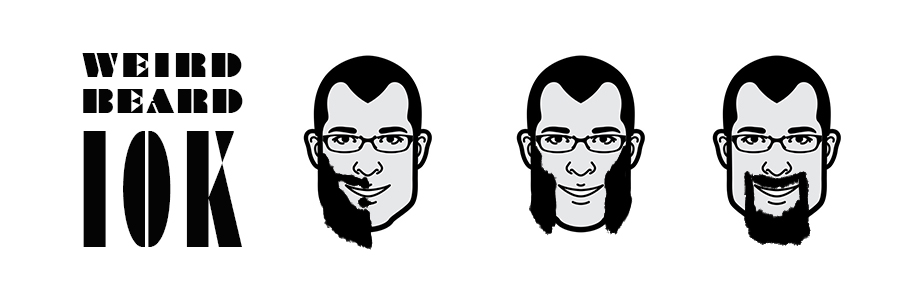
I thought I’d use it as an opportunity to raise funds. So, I’m dubbing it the weird beard 10k. Mention your favourite from the options below when you donate. If you’ve already donated, just drop me a note with your choice. I’ll keep a tally and run 10k with that beard at the end of August.

Donate here: https://uk.virginmoneygiving.com/Team/AgeasRunnersOptions:

Options:

  1. Half and half
  2. Mutton chops
  3. Goatee

May 13, 2020

What’s the half-life of a good deed?

I firmly believe companies should do good. I believe it’s the right thing to do. I also think it’s commercially beneficial in the long run. However, these are merely beliefs. I have no evidence.

I’ve read about (and occasionally leafed through) studies that show companies who score better on ESG metrics outperform their peers. I’ve done the same for studies that show more diverse companies outperform the market. This correlation is heart-warming, but it’s not evidence in the strictest sense.

To gather evidence about companies that do good being better than companies that don’t is no easy task. There are too many variables to control for and too many subjective opinions about “good” and “better”. It would require making a lot of assumptions.

It is too broad a subject for a single article. However, we can begin our journey by asking some fundamental questions.

What’s the half-life of a good deed?

Does a company doing something nice for you leave you more loyal to them? For how long does that loyalty last?

What’s the half-life of a bad deed?

Does a company screwing you over make you less likely to use them in the future? For how long does this animosity last?

Which half-life is longer? Good or bad?

What’s the half-life of a generally good deed?

If you haven’t personally benefitted from a company’s good actions, but have heard about them, are you better disposed towards that company? For how long?

What’s the half-life of a generally bad deed?

If you haven’t personally lost out from a company’s poor actions, but have heard about them, are you less disposed towards using that company’s goods or services? For how long?

Does availability affect the half-life?

If it is everywhere and convenient, do you get over the bad deed more quickly? Does the good deed last longer?

Does frequency affect the half-life?

If you use a good or service all the time, does a deed have a more or less material impact? If you rarely need the good or service, what’s the effect?

Does repetition affect the half-life?

If a deed is repeated, does it lead to any deeper level of meaning and lengthen the half-life? If a deed isn’t repeated but tales of it are, what’s the impact?

Does price affect the half-life?

If something’s cheap, do you ignore the misdemeanour? If it’s dear, are you willing to pay a premium for good deeds?

These questions obviously probe around ideas of trust, reputation, brand and purpose. They also come from an unapologetically commercial angle. I share them because I’ve been thinking about them a fair bit and I don’t know the answers.

My belief is that bad deeds have greater impact than good ones. That personal experience is more meaningful than broad gestures. That the half-life of a good deed is very short indeed. And, regardless of all that, companies should do good because it is the right thing to do. There need be no greater justification.

  • « Go to Previous Page
  • Page 1
  • Interim pages omitted …
  • Page 4
  • Page 5
  • Page 6
  • Page 7
  • Page 8
  • Interim pages omitted …
  • Page 28
  • Go to Next Page »

Copyright © 2026 Karan Chadda | Views are my own